Choosing between Google Ads and Meta Ads — or deciding how to split budget between them — is one of the most common questions in paid advertising. This post breaks down the real, practical differences so you can make an informed decision for your business.
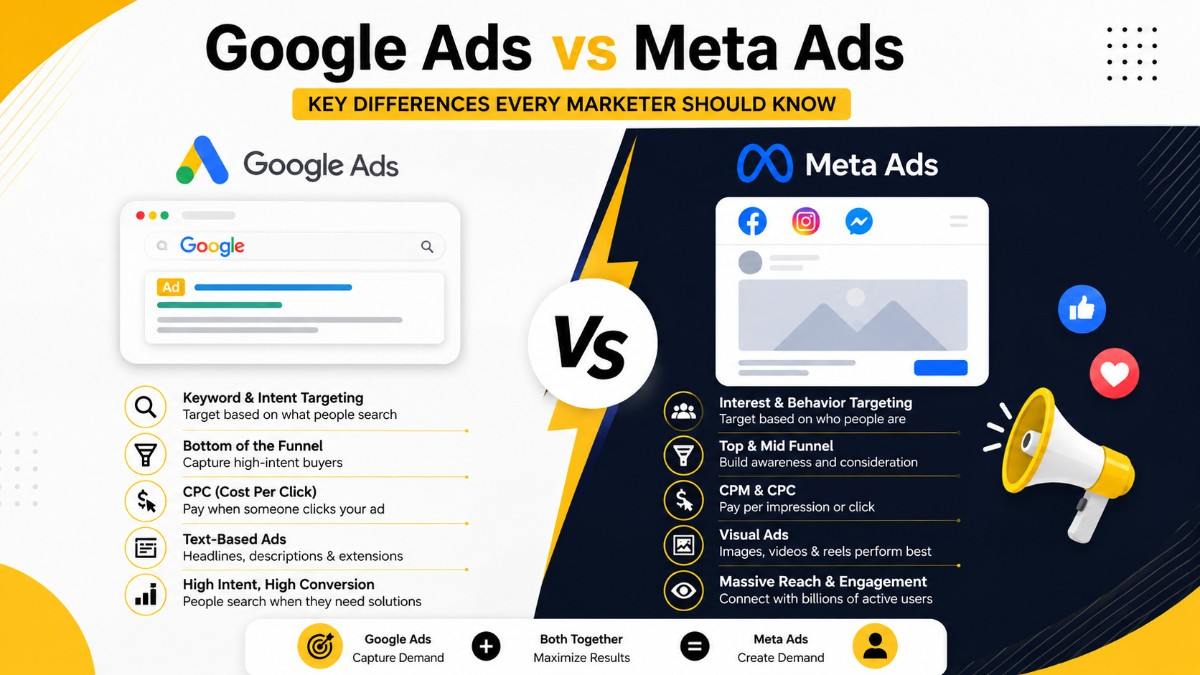
This means Google Ads works best when demand already exists, while Meta Ads is stronger for reaching people before they know they need your product — a concept often called demand generation.
Understanding the marketing funnel helps you allocate budget correctly: use Meta for awareness, Google Search for conversions.
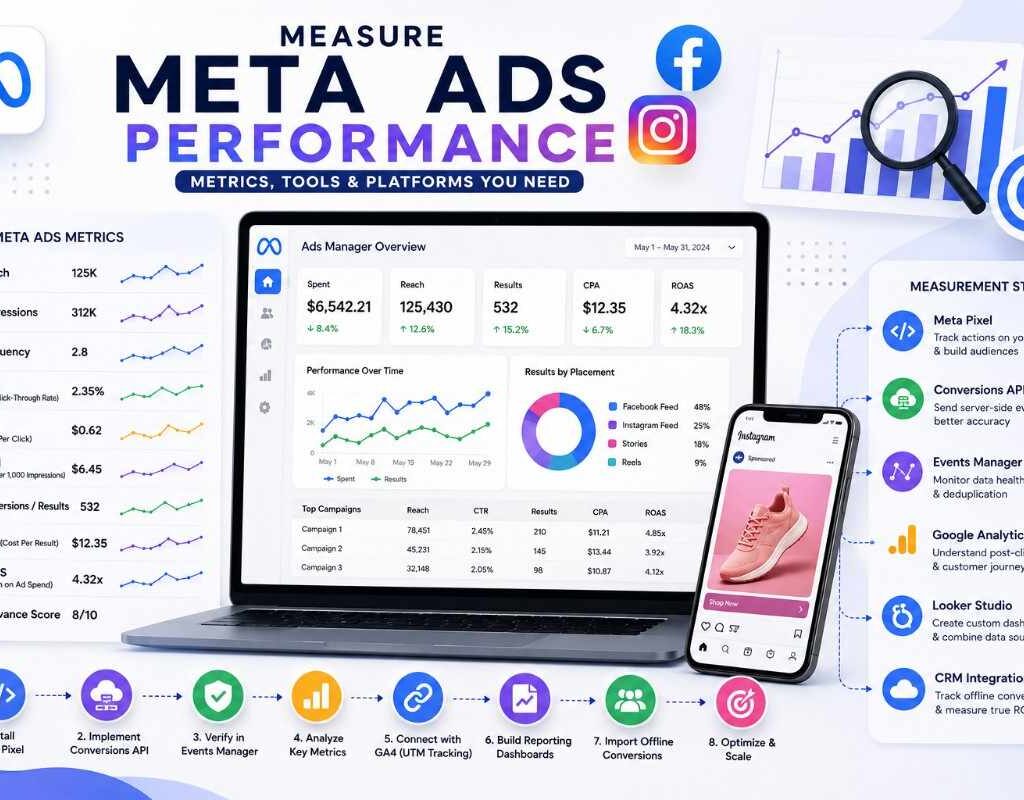
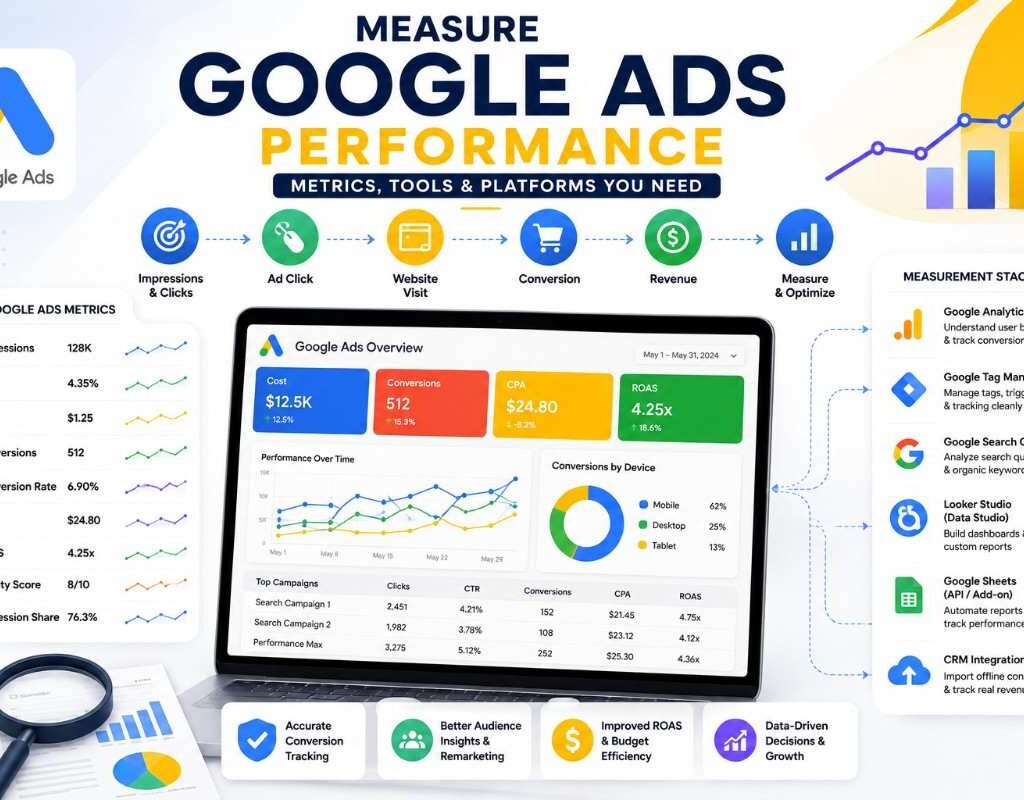
Both platforms use auction-based pricing, but the metrics differ:
Generally, Meta Ads tends to have a lower average cost-per-click than Google Search Ads, but conversion rates can vary significantly depending on audience quality and creative performance.
If your team is strong in copywriting, Google Ads may feel more natural. If you have strong visual content and video production capabilities, Meta Ads will likely perform better.
This is an important consideration for businesses that need precise ROI measurement.
| Factor | Google Ads | Meta Ads |
|---|---|---|
| Targeting | Keyword/intent-based | Interest/behavior-based |
| Funnel stage | Bottom-funnel | Top/mid-funnel |
| Pricing model | CPC-heavy | CPM & CPC |
| Creative focus | Text | Visual/video |
| Attribution accuracy | Higher | More modeled |
| Learning curve | Steeper | Moderate |
If your budget allows, run both. Use Google Ads to capture people ready to buy, and Meta Ads to build awareness and warm up your audience before they search. This combination is one of the most effective approaches in modern digital advertising strategy.
Have a project in mind? Let’s create a digital solution that fits your goals and budget
We help businesses build, grow and succeed online through website development, SEO, social media management and paid advertising — with practical solutions at affordable prices.
Follow DigitalBase for digital marketing tips, SEO insights, website tips and business growth strategies.
Copyright © 2026 DigitalBase. All Rights Reserved.
Call Us