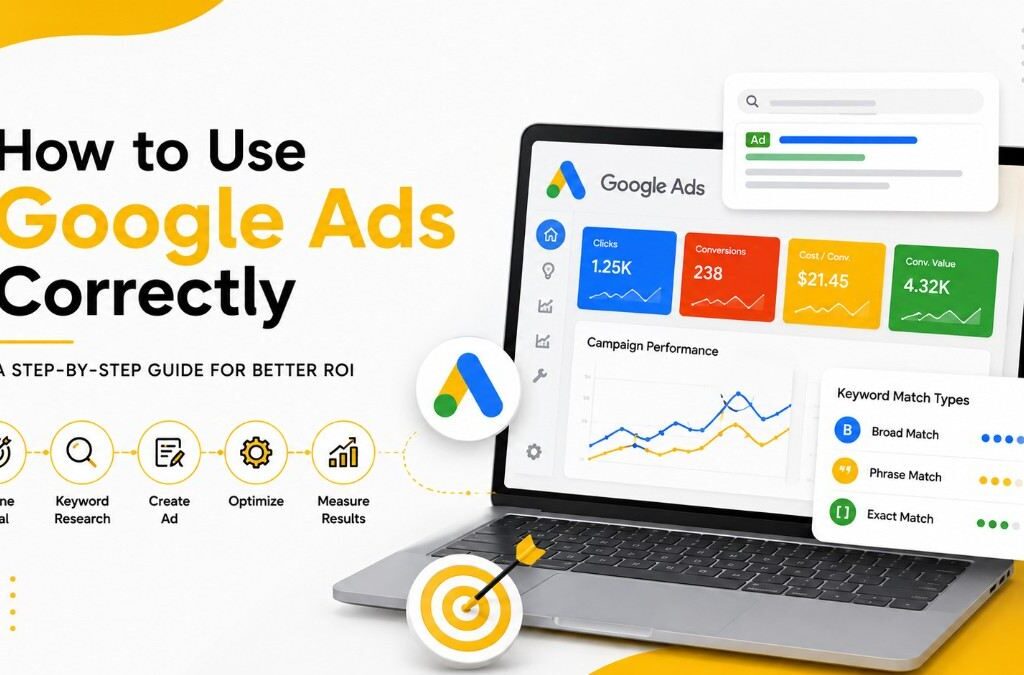
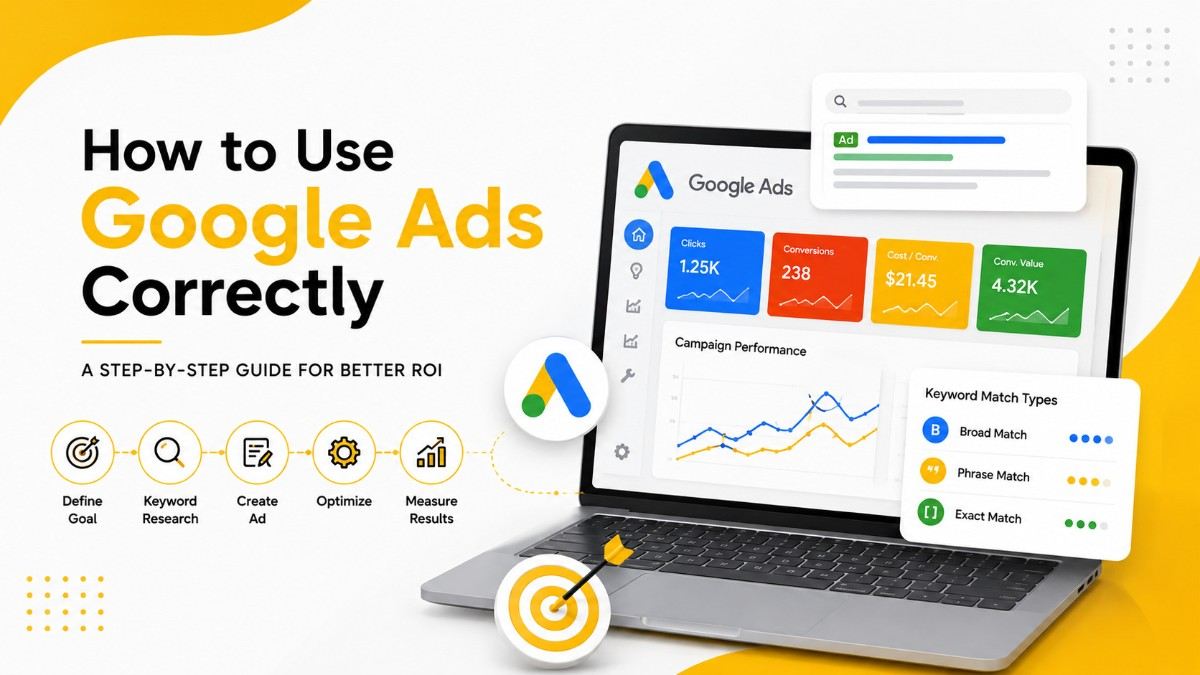
Running Google Ads without a clear strategy is one of the fastest ways to waste ad spend. This guide walks through how to set up and use Google Ads correctly, step by step, so your campaigns are built on a solid foundation from day one.
Before touching the platform, decide what success looks like:
Your goal determines your campaign type (Search, Display, Shopping, Video, Performance Max) and your bidding strategy. Skipping this step is the most common mistake beginners make with Google Ads campaign setup.
A well-organized account structure improves both performance and manageability:
Avoid cramming unrelated keywords into one ad group — this hurts your Quality Score, which directly affects your cost-per-click and ad position.
Understanding keyword match types is essential to controlling who sees your ads:
A good practice is starting with phrase and exact match keywords, then expanding based on search term reports.
Negative keywords prevent your ad from showing on irrelevant searches, saving budget. For example, if you sell premium products, you might add “cheap” and “free” as negative keywords to avoid attracting low-intent clicks.
Review your search terms report weekly to catch new negative keyword opportunities.
Since Google Search Ads are text-based, copy quality matters enormously:
Google Ads offers multiple bidding strategies:
Start conservatively and shift to automated bidding once you have enough conversion history (typically 30+ conversions per month) for Google’s algorithm to optimize effectively.
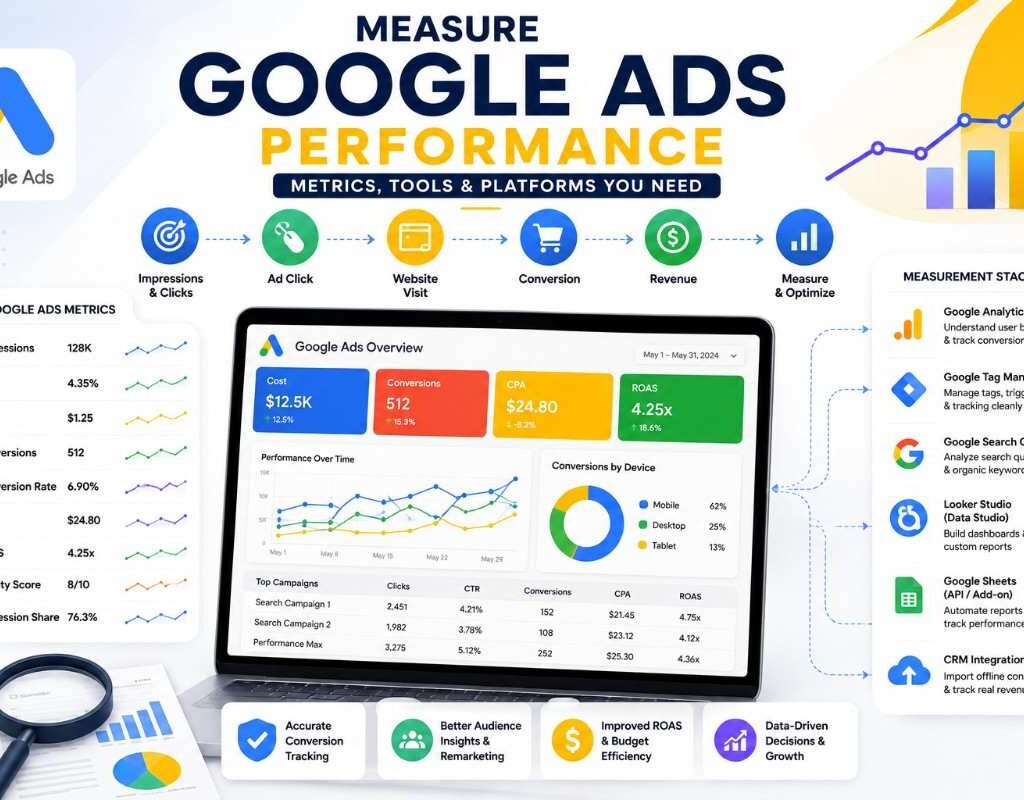
Without accurate conversion tracking, you’re optimizing blindly. Install:
Your ad is only half the equation. Landing pages should:
Poor landing page experience lowers your Quality Score and increases your cost-per-click.
Use A/B testing on:
Using Google Ads correctly comes down to structure, relevance, and continuous optimization. Get the foundation right — clear goals, tight ad groups, strong keyword hygiene, and solid tracking — and the platform will reward you with better Quality Scores and lower costs.
Have a project in mind? Let’s create a digital solution that fits your goals and budget
We help businesses build, grow and succeed online through website development, SEO, social media management and paid advertising — with practical solutions at affordable prices.
Follow DigitalBase for digital marketing tips, SEO insights, website tips and business growth strategies.
Copyright © 2026 DigitalBase. All Rights Reserved.
Call Us